Service Design • UX Design • Systems Thinking • Human Resources
GRO | Gamified Relational Onboarding
Project Details
| Role | Strategic Service Designer Focus on UX Flows, Co-Design, Service Blueprinting, and Ethnographic Research |
| Duration | 4 months (Feb-Jun 25) |
| Institution | Politecnico di Milano |
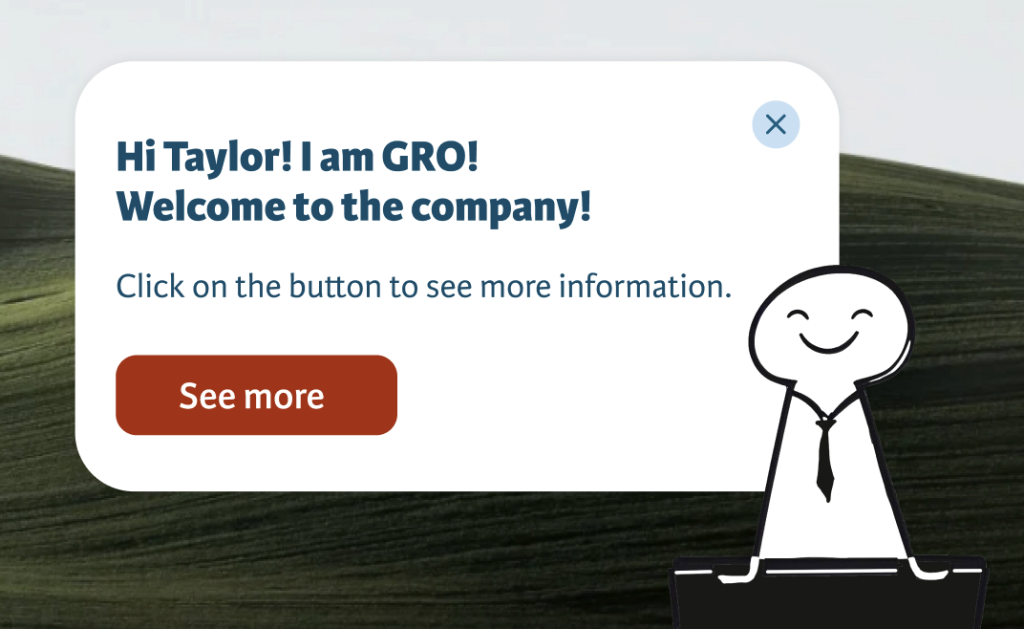
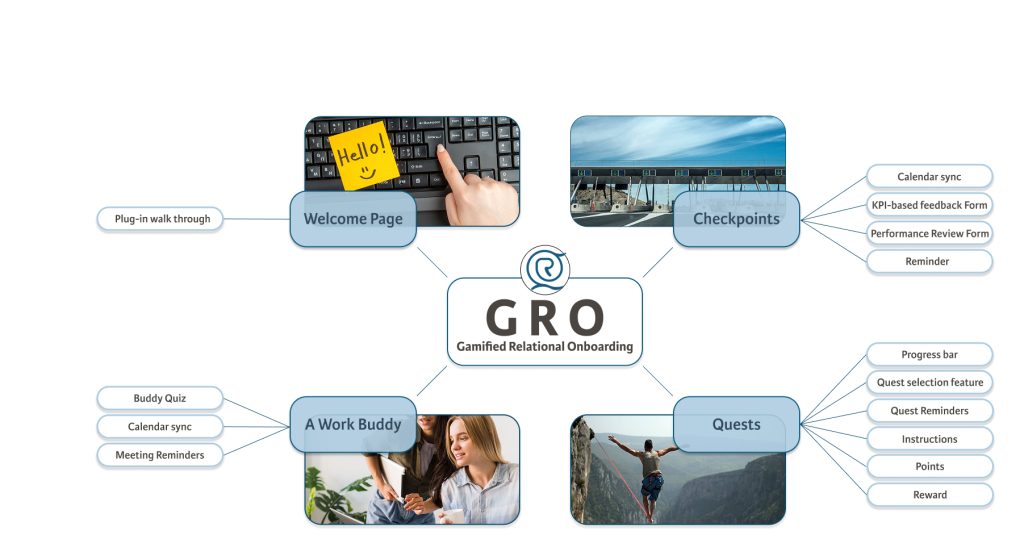
GRO (Gamified Relational Onboarding) is a 12-month gamified relational onboarding service that enhances belonging, professional growth, and retention by combining personalized quests, structured buddy support, and reflective checkpoints within existing corporate systems.
Overview
GRO – Gamified Relational Onboarding is a 12-month plug-in service designed to complement existing onboarding systems in large companies (250+ employees). GRO reduces first-year turnover by combining gamification, relational support, and structured growth pathways.
The service centers on three core components:
-
Quests: Personalized, phase-based challenges supporting personal and professional growth.
-
Buddy System: Structured relational guidance through matched peer support.
-
Checkpoints: Recurring reflection moments shared with managers to align expectations and development.
The journey unfolds across four phases—Start, Learn, Play, Strategize—scaffolding new hires from uncertainty to autonomy and long-term planning. Through tailored quest selection, calendar integration, reminders, KPI-based feedback forms, and progress tracking, GRO transforms onboarding from a compliance-heavy process into a developmental journey.
By combining socio-emotional connection with performance alignment, GRO creates a measurable, engaging, and human-centered onboarding experience that strengthens integration, builds cross-department relationships, and supports career clarity

Design Challenge
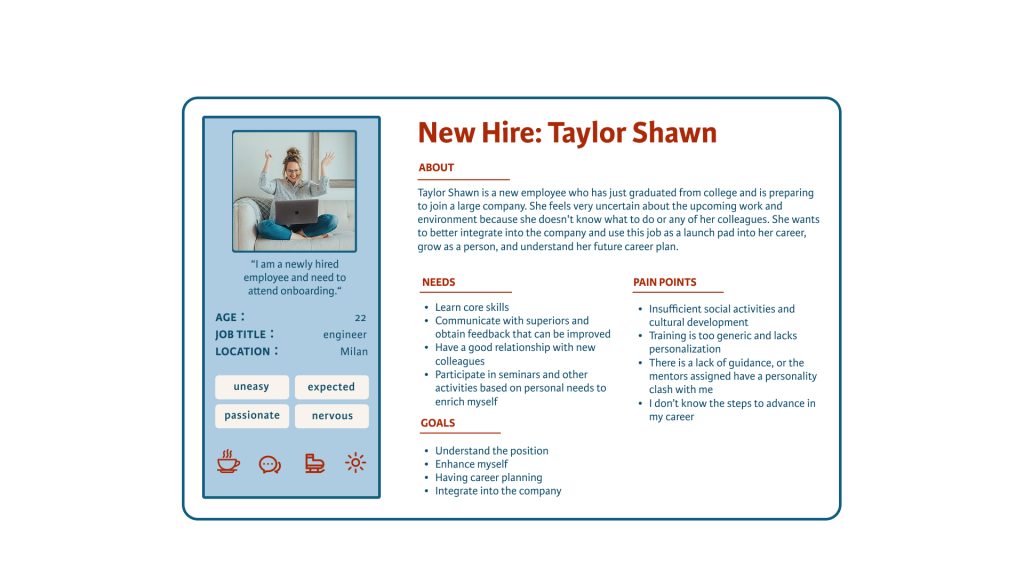
Research revealed a critical tension: onboarding is structured, but not relational; informative, but not personalized. Despite its potential to reduce first-year turnover significantly, many programs fail to foster belonging, clarity, and long-term growth.
Our design question emerged: How might a personalized onboarding experience focused on relationship-building and professional growth reduce first-year turnover among early-career hires?
Interviews and case studies highlighted key pain points: Generic training lacking personalization; Weak or mismatched buddy systems; Limited socio-emotional integration; Unclear pathways for growth.
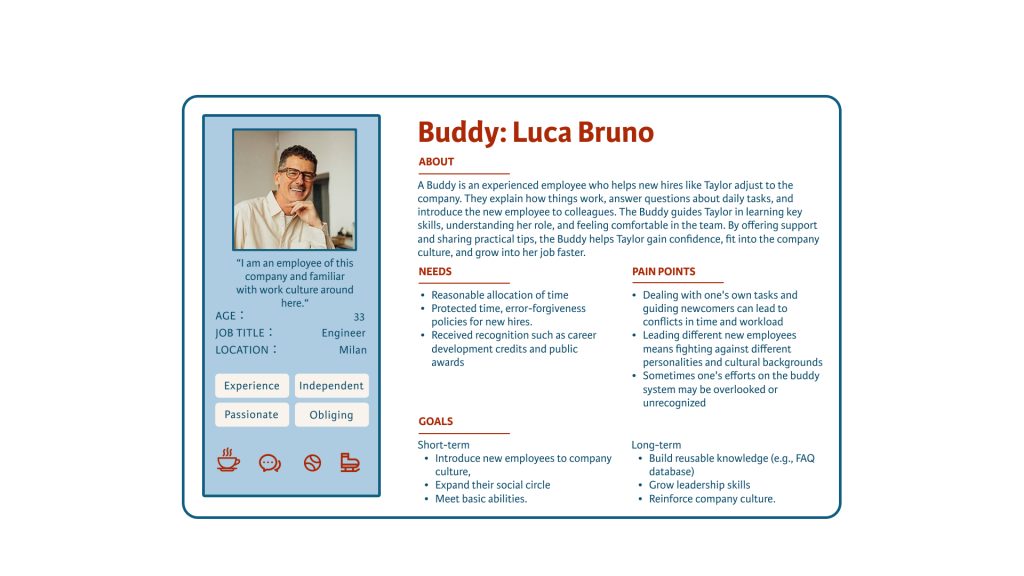
Early-career hires want guidance, autonomy, and visible opportunities for development. Meanwhile, buddies and managers face time constraints and lack structured tools for mentorship.
The challenge became systemic: not to redesign onboarding from scratch, but to create a scalable plug-in that integrates into existing infrastructures while improving engagement, clarity, and connection.
Personas
Process
Our process began with secondary research and interviews exploring onboarding experiences. Insights clustered around personalization, gamification, emotional connection, and growth visibility.
We mapped stakeholders—new hires, buddies, managers, HR, IT—and identified breakdowns across the onboarding ecosystem. This systems perspective reframed onboarding as a relational network rather than a linear HR procedure.
Early brainstorming generated concepts including board games, AI Assistants, and immersive formats. Through synthesis, we identified three consistent value drivers: structured relational support, progressive growth scaffolding, choice-based engagement.
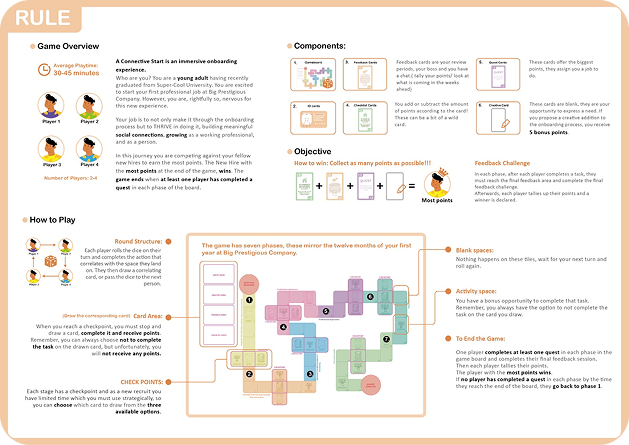
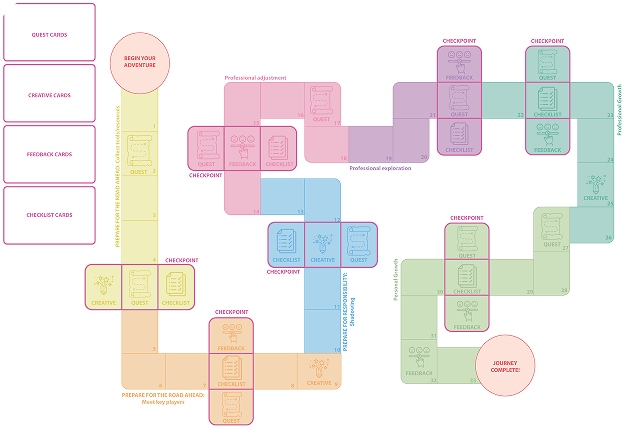
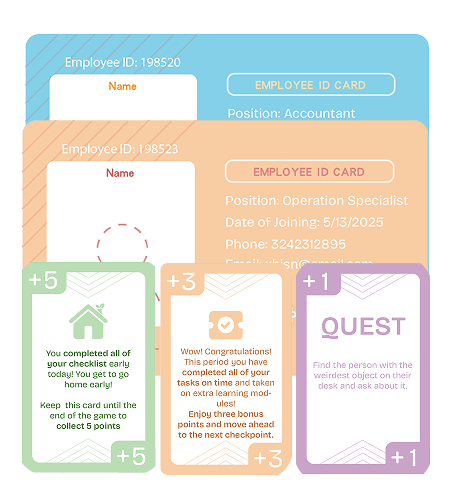
A co-design session with boundary objects (board game prototype, rule sheets, onboarding prompts) allowed participants to simulate onboarding journeys. Observations and in-game feedback revealed the importance of flexibility and long-term pacing.
The process evolved from a single-phase gamified concept into a structured 12-month journey with defined phases, behavioral scaffolding, and integrated performance touchpoints.
Offering
Prototyping & Codesign
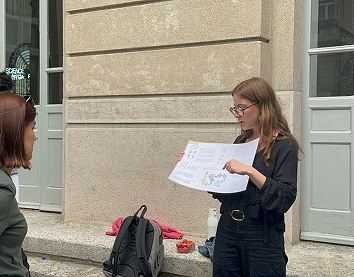
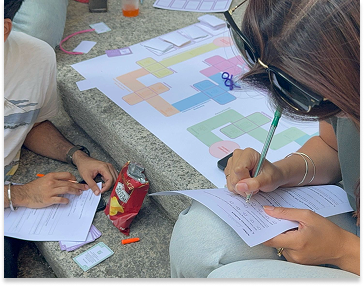

We prototyped GRO at multiple levels: concept, interaction, and system.
Low-fidelity prototypes included a physical board game experience used during co-design sessions to test gamification mechanics and engagement patterns. This revealed that while play increased engagement, onboarding required more structured developmental progression. This codesign session was conducted with 6 potential users. We used a low-fidelity MVP (in the form of a boardgame) to test the service structure.
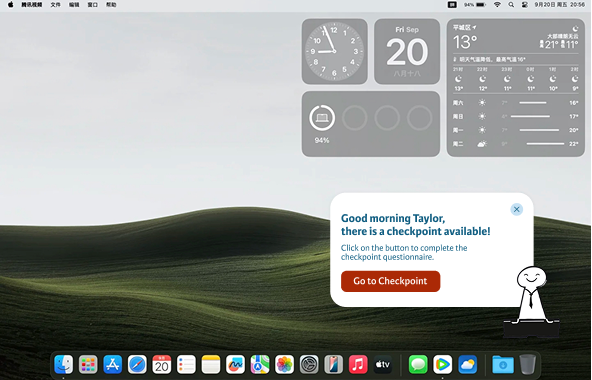
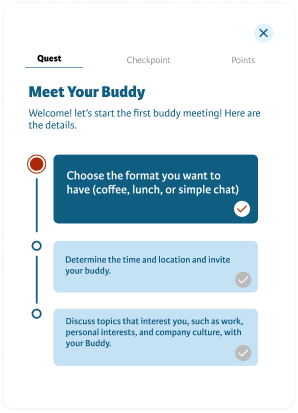
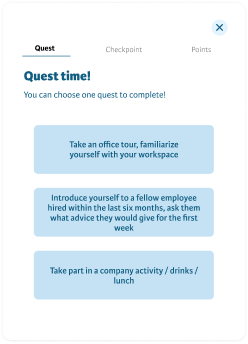
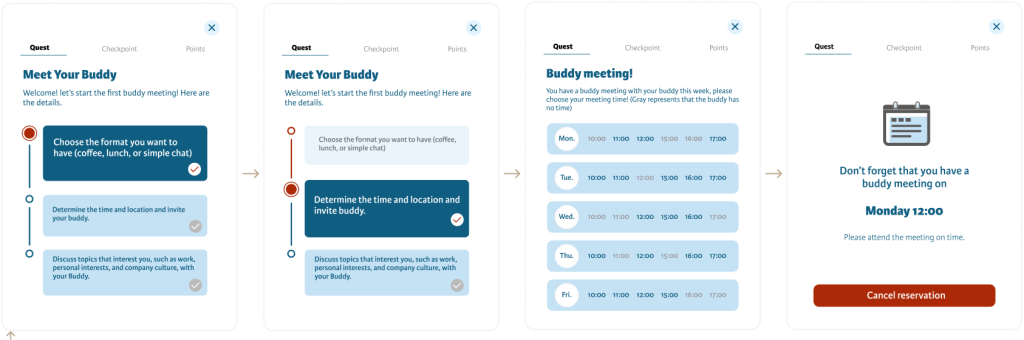
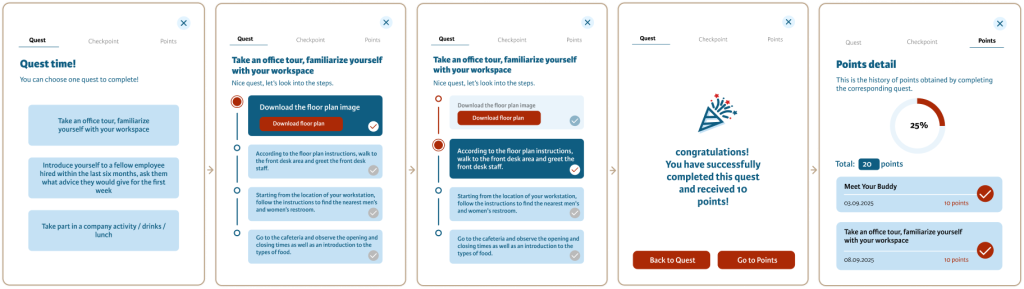
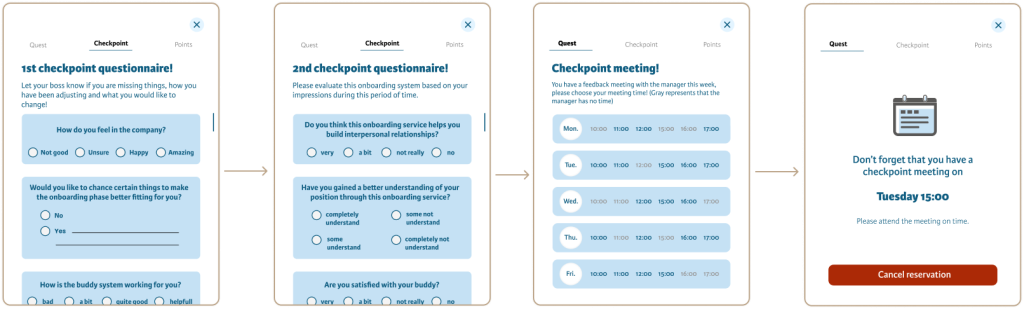
We then developed digital interface mockups including: Buddy matching quiz; Quest selection interface (three options per cycle); Calendar synchronization for meetings; Checkpoint questionnaires shared with managers; Progress bars and reward systems
Journey maps and service blueprints were built to test frontstage/backstage interactions across pre-service through post-service phases. These artifacts clarified HR processes, buddy incentives, feedback loops, and data flows.
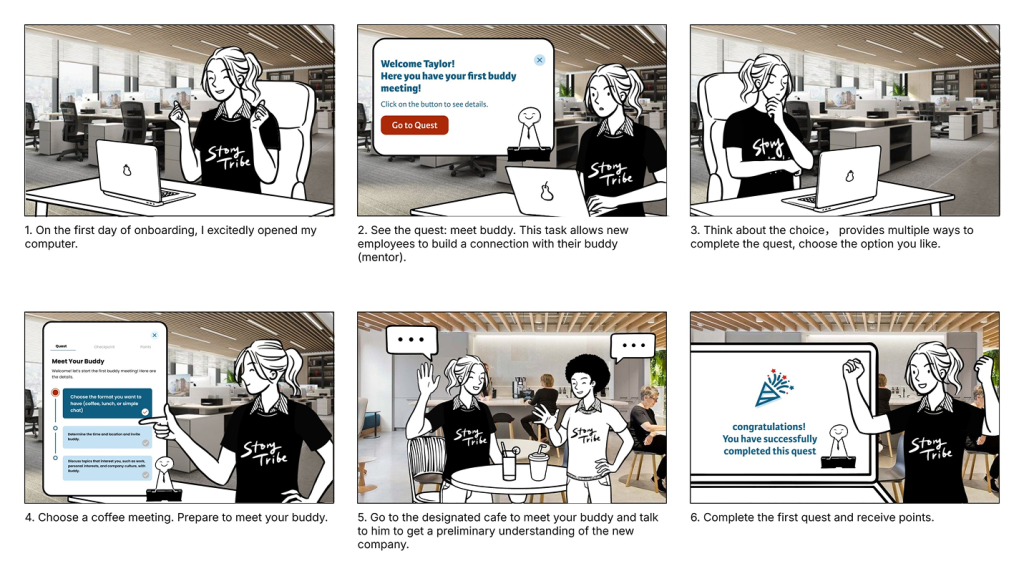
Through scenario testing (e.g., first buddy meeting scheduling, checkpoint reflection), we refined notification timing, quest frequency (twice weekly → weekly → biweekly → monthly), and phased autonomy progression.
Prototyping helped balance structure and flexibility—ensuring GRO guided without overwhelming.
Boundary Objects
Pivots
Our major pivot shifted the service from a short-term gamified onboarding experience to a 12-month growth journey.
Initially, the concept centered on a highly gamified buddy-board-game format. Co-design testing revealed limitations: onboarding is not a one-time event but an evolving integration process.
| We Maintained | We Pivoted |
|---|---|
| Gamification |
From event-based to longitudinal (4 phases across 1 year) |
| Buddy-centered support |
From playful competition to growth-oriented scaffolding |
| Engagement through quests |
From standalone system to onboarding plug-in |
These pivots strengthened alignment with organizational realities while preserving emotional engagement.
UI Mock-Ups
Final Outcome
Blueprint
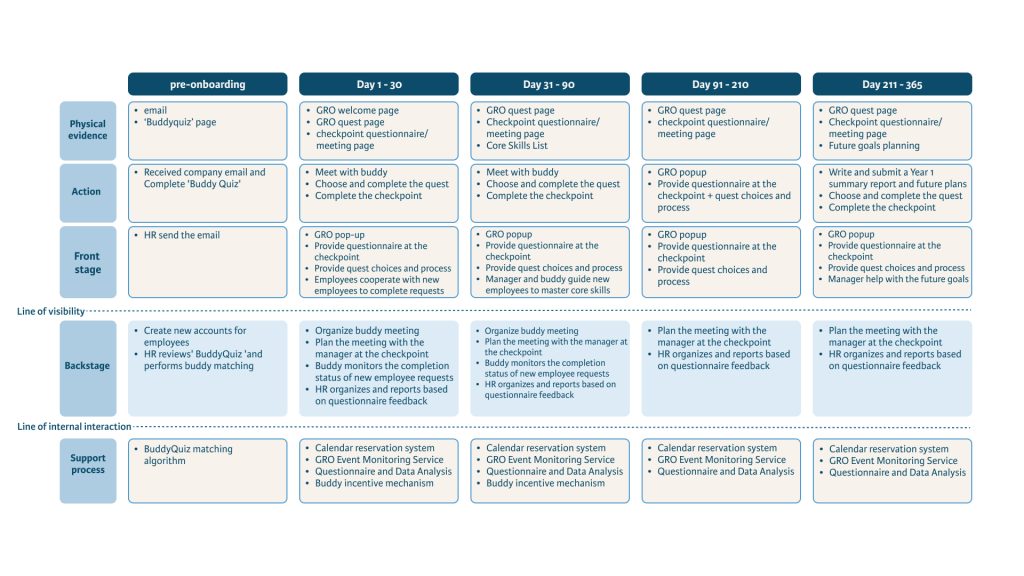
GRO is a scalable onboarding plug-in designed for large organizations seeking to reduce early-career turnover through relational integration and structured growth.
The service includes: Buddy matching algorithm; Phase-based quest system (Start, Learn, Play, Strategize); Recurring checkpoints shared with managers; Calendar integration and automated reminders; Performance-aligned reflection forms; Progress visualization and rewards
Over 12 months, new hires transition from navigating uncertainty to independently strategizing their future within the company.
GRO creates: Stronger cross-department connections; Clear growth pathways; Structured manager conversations; Increased belonging and autonomy
The system reframes onboarding as the foundation of long-term employee engagement rather than a short integration phase.
Storyboard
Touchpoint: First Buddy Meeting
Touchpoint: First Quest
Touchpoint: First Checkpoint
Reflection
Designing GRO required balancing emotional design (belonging, confidence, growth) with operational feasibility (HR workflows, manager time, IT integration).
A key learning was the importance of pacing. Growth cannot be gamified superficially—it must be scaffolded. The four-phase model emerged from recognizing that autonomy develops progressively. Using my background in education and educational systems informed the design of an onboarding system that transcended one fixed moment in the employee journey, but offered accompaniment throughout.
Working with GRO highlighted the importance of pivoting early. Moving from a game-based concept to a year-long developmental service strengthened strategic depth and organizational viability.
Most importantly, this project reinforced that service design succeeds when empathetic, user centered research meets impact driven efficiency and results. GRO aligns individual growth with organizational retention—making onboarding both human and measurable.